

Pluribus, House, and Loneliness
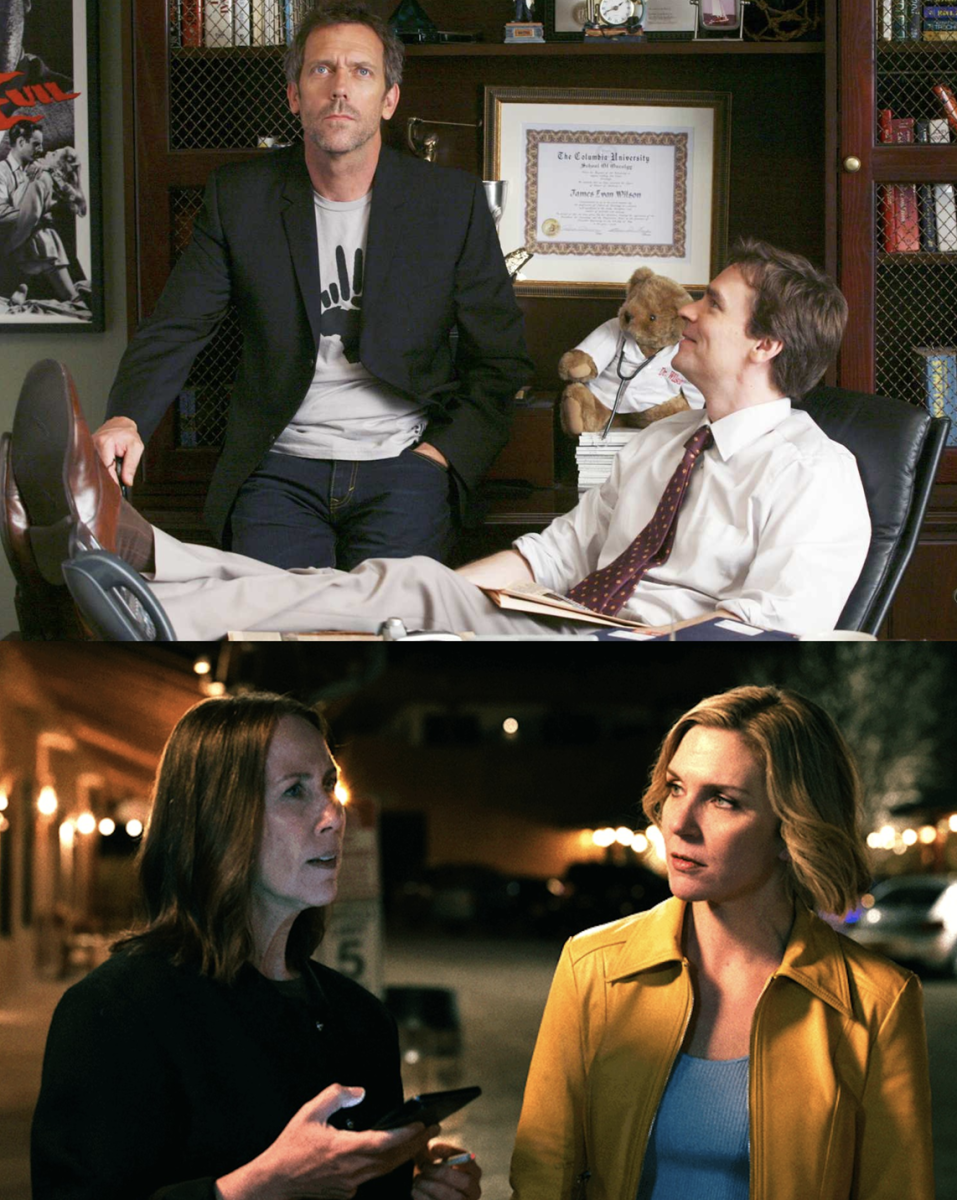
It doesn’t matter who you are. It doesn’t matter what you do. As humans, one thing is certain: we need each other.
I saw Pluribus over the winter break. It was great (go figure, Vince Gilligan made it). It centers around Carol Sturka, the most miserable person in the world, and her journey through the “joining” of the human race, of which she was inexplicably immune to, and the process of which resulted in the death of her wife.
Carol is noticeably prickly right off the bat. Despite being an author of a book series with countless fans, she is largely indifferent, even resentful to a certain extent, of her situation. Dealing with her fans is nothing more than an annoyance. Helen, Carol’s wife and manager, is the only reason she can get through her daily life. She is shown to have a short temper, and is quick to take offense from any interaction she has with people, no matter whether she is drunk or sober (though her drinking problem certainly exacerbates this trait). Despite her antisocial tendencies, she trudges on, because she has someone who always supports her and loves her for who she is.
However, due to how the “joining” process works, with affected individuals seizing in place until they finish “joining,” Helen drops dead. Very literally. Her death scene is her standing in place, getting hit by the weird “joining” gas or chemical stuff the “joined” (the fandom calls them the Plurbs) release into the air via airplane, seizing, and then falling backwards onto the concrete ground. Either she was able to resist the chemical to a certain extent but not enough to survive it, or the physical damage she sustained was lethal. The writers have yet to reveal why specifically she died. Point is, she dies, meaning Carol has just lost the only person in her life who has any sort of affection or romantic attraction towards her. This means the “joining” of the human race marked not only the end of the world, it marked the end of her world.
After going through all the motions, being told how exactly the “joining” works, why the Plurbs are docile, and how they keep their “hosts” alive, Carol learns that the Plurbs cannot lie. She exploits this in order to learn whether the “joining” can be reversed. One of the Plurbs lets it slip that it’s possible, and implies they know how to reverse it, but refuses to elaborate, as letting Carol know how would go against their biological imperative: everyone, not just on Earth, but in the whole universe, must be “joined.” Despite this, Carol pushes onward, by injecting one of the Plurbs, originally named Zosia, with truth serum, asking them how to reverse it. As the whole world is “joined,” every other Plurb feels what Zosia feels, and continually asks Carol to stop. Initially resistant, Carol lets Zosia go, failing to learn how the “joining” could be undone. As a consequence, every Plurb present in her hometown of Albuquerque, New Mexico (fitting for Gilligan to set yet another one of his shows here) leaves the city.
Carol is now alone, with no one else to interact with. She tries to cope with this fact by enjoying various solo activities, like going golfing or visiting museums, but ultimately caves after about seven weeks. With a paint roller, she writes a message to the Plurbs in the middle of the street: “come back.”
This was by far one of the most powerful scenes in any TV show I’ve ever watched. Despite her aggression towards the Plurbs, despite believing she could do everything on her own, at the end of the day, she is still human. And as a human, she needs some sort of human interaction.
Helen was her rock. Not just as her partner, but as a person for her to interact with. As far as we know, Carol’s relationship with Helen was about the only meaningful relationship in her life at that point—her only meaningful human relationship. So when she loses her, and learns the only other people she can consistently interact with (as most of the people who were not “joined” wanted nothing to do with her) are both not human and technically all one “individual” (the “joining” led to the human race becoming a collective consciousness), she’s rather hesitant to accept her new reality. But when this “individual” ceases practically all contact with her, she is pushed to her limit, and is forced to accept her new reality, realizing that having contact with intelligent life, human or otherwise, is better than complete isolation.
The connection between Carol and House arises when Helen dies and the “joining” happens. We learn that Carol’s antisocial tendencies did not arise when these things happen. She was always like this. Right before these things happen, and even in years-ago flashbacks she is like this. Just like House.
Gregory House, the main character of…you guessed it, House, is a very antisocial person. He cracks jokes no matter whether it’s appropriate, offends at every opportunity, and is generally defiant of the social order. He has a strong aversion towards authority, believing he can do whatever he wants. In the show, we’re led to believe this is because of his leg injury. He uses Vicodin to treat it, but regularly abuses the substance, leading him to depend upon it, worsening his mental state. Similarly, Carol abuses alcohol but isn’t necessarily dependent upon it. As we get to know House, however, it is shown that his antisocial tendencies were always a part of him. Despite his intelligence, House regularly cheated in school and often used people well before his leg injury. Instead of seeing his injury as a reason to better himself, it became what he was seeking his whole life: a real, tangible justification for his behavior, exploiting the emotional response it evoked in people.
Most people believe this quality of theirs would cause them to be alone, and to a certain extent, they’re right. Both House and Carol don’t necessarily have many close personal connections. Yet the writers of these shows were aware of this fact, and so they made sure they had professions that involved at least some human interaction: House is a doctor, and Carol is an author. Due to their professions, they met the most important people in their lives: House met his best friend Wilson at a medical conference, and while it is unclear how Carol and Helen initially met, Helen’s position as Carol’s manager helps deepen the bond between them.
They make up for their abrasive exteriors by the good they do for the world. House saves lives, Carol entertains. Even the worst people can do good, and Wilson and Helen were able to see that. They managed to get past the thorns and find the water inside of these cacti.
The way I see it, House’s social life is what Carol’s would’ve been had the “joining” not occurred. Dysfunctional, yet functional nonetheless. The reason why it’s dysfunctional is another reason why they’re connected: House is well aware Wilson is the only person he has a meaningful connection with. Subconsciously, he’s afraid of losing Wilson. This is why throughout the show, he does all sorts of things to keep Wilson in his life. It’s been a long time since I’ve seen the show in its entirety (even after seeing it twice and watching bits and pieces of it when my dad rewatches it here and there), so I can’t recall too many instances of this, but a big one that happens early on (around Season 1 or 2) was when Wilson is kicked out of his place due to his failing marriage and ends up living with House. It was supposed to be a temporary arrangement, and Wilson was actively looking for apartments, but when he gets a voicemail from his realtor, House deletes the voicemail, leading Wilson to stay with House for longer than he expected. House does whatever he can to keep the only meaningful relationship in his life because he knows how he will react if he loses it. In this regard, House is too smart for his own good. He knows how people work and he knows how he works. He has been miserable his whole life, but being around people, even though he denies it, helped him get through each day. But Carol didn’t know herself. She was too comfortable living with Helen and paid the price when the Plurbs came, got Helen killed, and eventually left her. She always believed herself to be independent, but was too stubborn to realize that even a woman like her needed someone to talk to.
That’s the lesson I’m trying to teach here. As I said in the beginning, it doesn’t matter who you are, what you believe you’re capable of, or what you might’ve gone through, you need someone. At least one person you can rely on and talk to. At least some sort of social interaction.
I don’t know how people who live in the woods completely alone do it. I would go nuts after a month, maybe a year tops. Were I born and raised under different circumstances, maybe I’d last longer. But I could never do something like that. I’m not saying a person can’t live by themselves. Plenty of people live alone. But ultimately, they will have to be part of civilization. They will have to go out and interact and interact with other people. We must learn to coexist with each other whether we’d like to or not.
We can be alone. Even the most social people need to be alone sometimes. But you should never be alone AND lonely. Even if you’re the most antisocial, introverted hermit in the world, you need bare MINIMUM, one person in your life. Finding that person may be tricky, especially if you’re unwilling to change who you are, but who knows? Chances are, somewhere, out there in the world, is a person who is willing to put up with you. In fact, they might even enjoy doing so.